
No thinking allowed
I climbed out of an artistic rut with help from Ray Bradbury and friends

After showing photos at four solo exhibitions in the last 12 months, I found myself feeling tired and burned out earlier this spring. All my pictures looked the same, and when I went out with my camera the photos I took were invariably boring. Art began to feel too much like a job.
Then a small miracle happened: I read an article on Medium about science fiction author Ray Bradbury’s advice to writers. Posted by a young writer in India named Anuj Sarita, it was titled “A list of Ray Bradbury’s genius that will kick your ass to write more.”
This came at a perfect moment. My friend Paul, who’s in a writing group I’ve been part of for a couple decades, had been talking to us about Bradbury — I believe Paul even met him once — so I was ready to pay attention when I read that Bradbury strongly emphasized quantity over quality. “The best hygiene for beginning writers or intermediate writers is to write a hell of a lot of short stories,” he told a symposium in 2001.
He also told writers to stop thinking about their work. “The intellect is a great danger to creativity,” he said in a 1974 interview, “because you begin to rationalize and make up reasons for things, instead of staying with your own basic truth — who you are, what you are, what you want to be…. You must never think at the typewriter — you must feel.”
Bradbury argued that if you’re blocked, it’s because you’re not doing what you love. Which is, in essence, suggesting you’ll get more good work done if you let yourself have more fun.
Armed with Ray Bradbury’s permission, I sat down in the studio the next day and told myself I wasn’t making art. I wasn’t trying to portray the essence of the Oregon forest. I wasn’t thinking about what might sell in a gallery. All I was doing was playing with paint, and having fun.
I pulled out a stack of 18x24 black and white photos from the reject pile — not bad pictures, just ones that hadn’t quite fit my idea of art on a particular day — and began to paint without any plan in mind, without any method, and without any rules. I splashed paint in random places on the photo, added colors that didn’t make sense, created broad brush strokes with no reason.
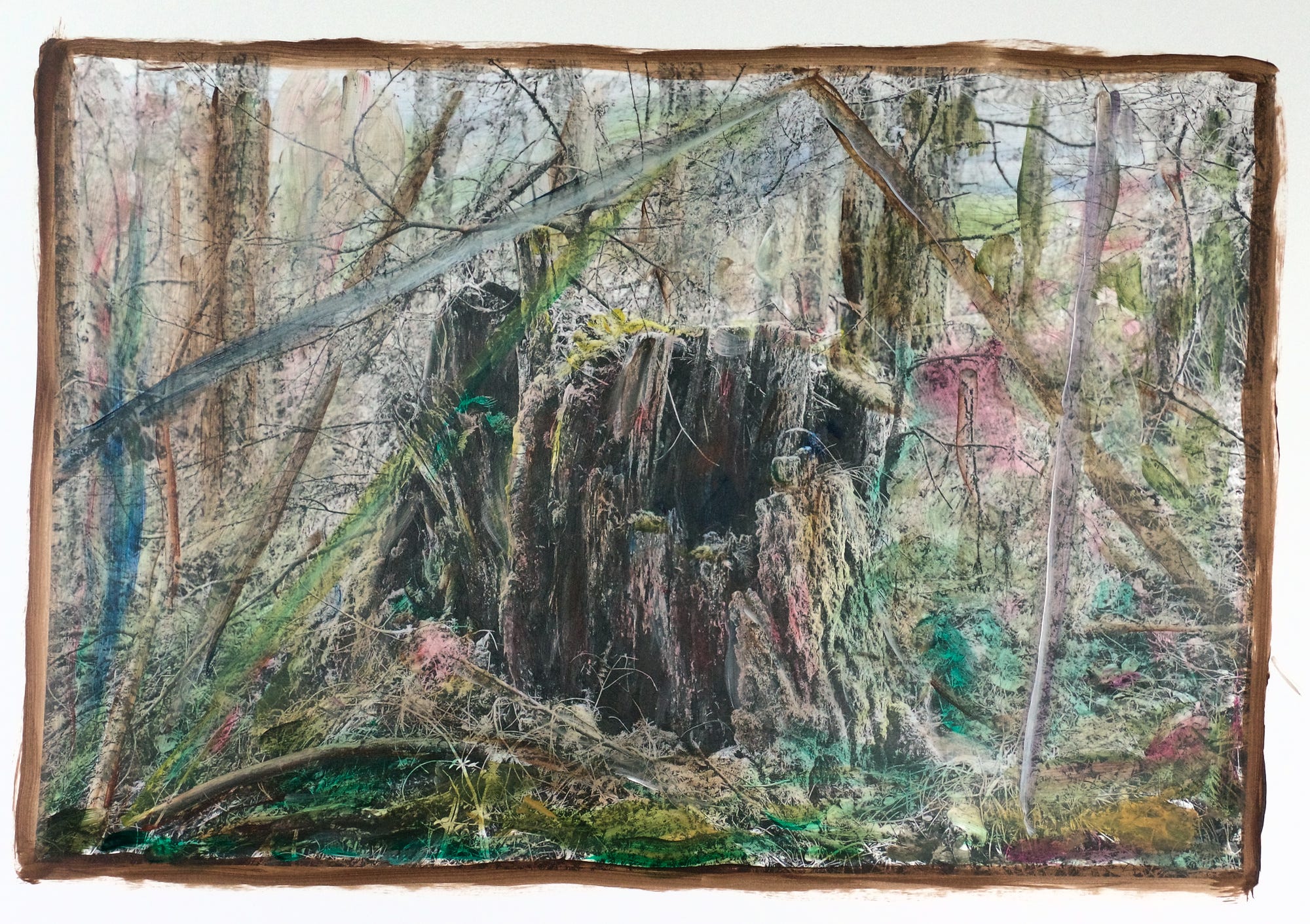
From long practice, I was careful to keep the paint within the boundaries of the photo, so as not to interfere with the look of the picture matted and framed. When I accidentally smudged the paint into the pristine white border, I first made myself shrug it off, and then filled my brush with thick opaque paint of a random color and sketched a frame around the image, covering my mistake and wonderfully altering the look of the whole photo.
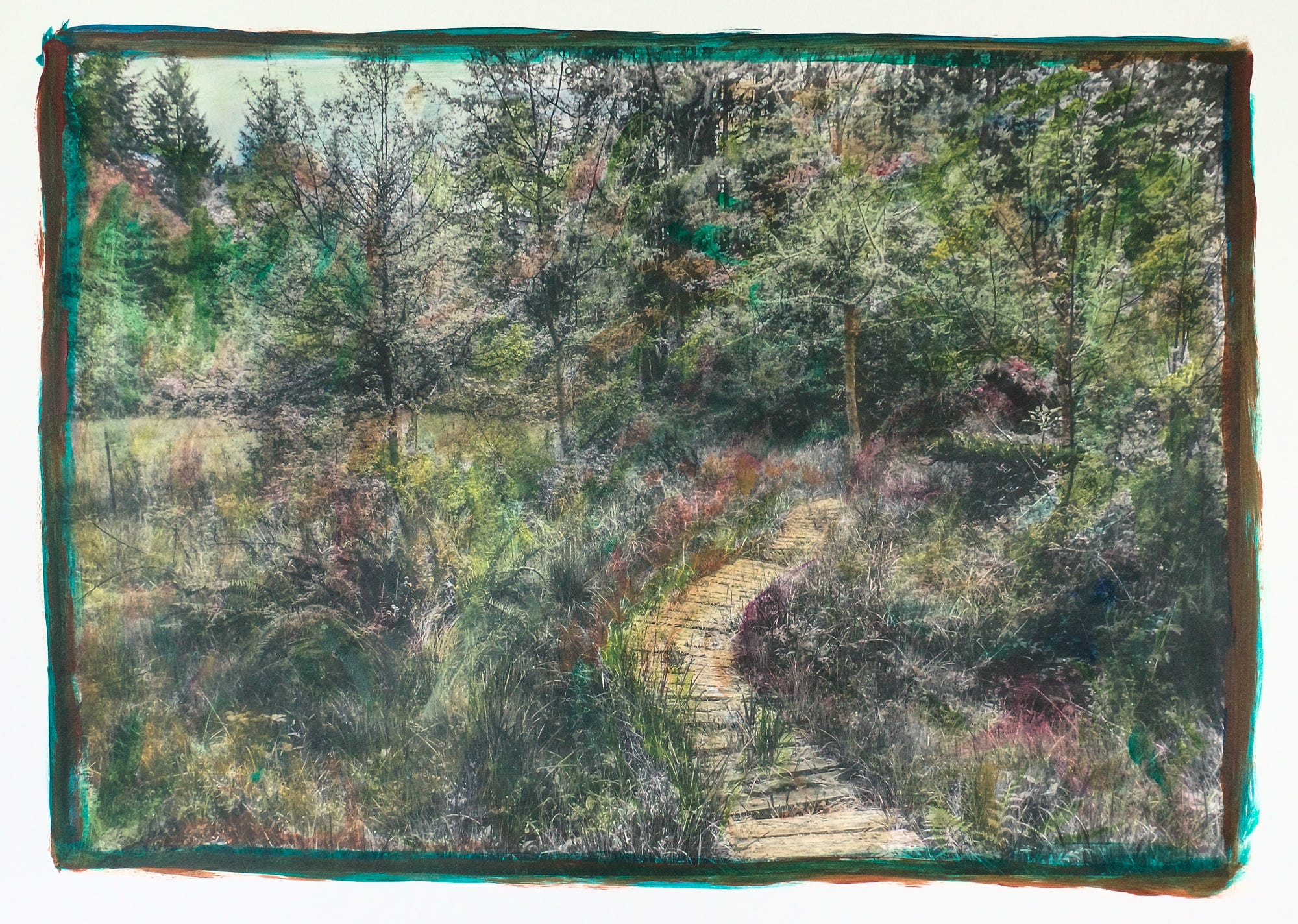
I love that look, frame, splashes and all. The random paint added a wild energy to my pictures of a natural wilderness, and, yes, it was great fun to do. I kept painting one photo after another until, by the end of the week, I suddenly had a dozen new pictures, all with that same unreasonable power. No more artist block. I look forward now to taking my camera out and to studio time. I’ve been making new work and even happily writing grant applications for the future.
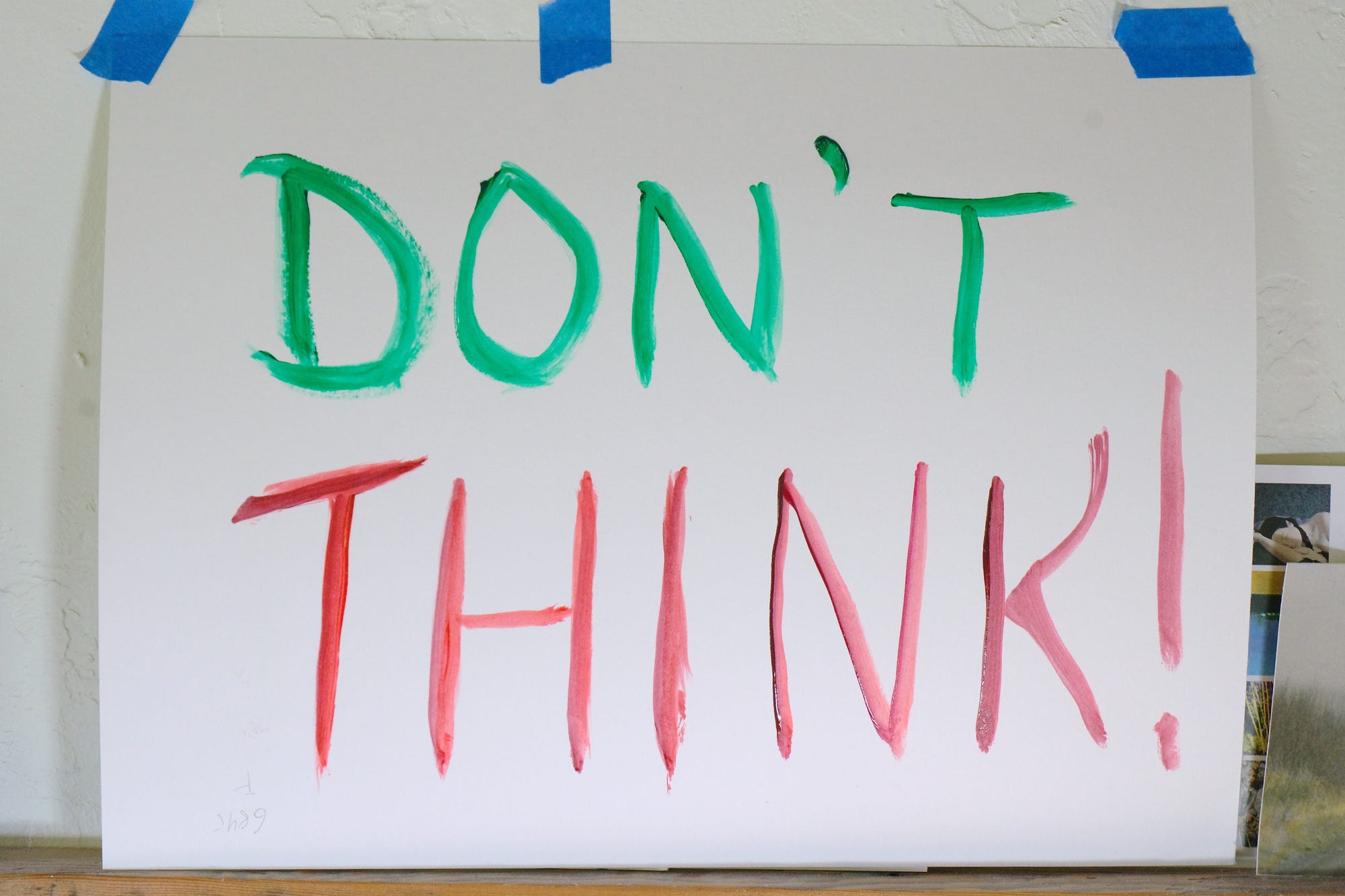
The danger now, of course, is that I’ve come to like those pictures so much that already I’m thinking about how to push further in that direction. How to make them even better. How to market them. Hang on for a moment. It’s time to stop thinking again. Ray Bradbury even had a sign over his typewriter that said “Don’t think!”
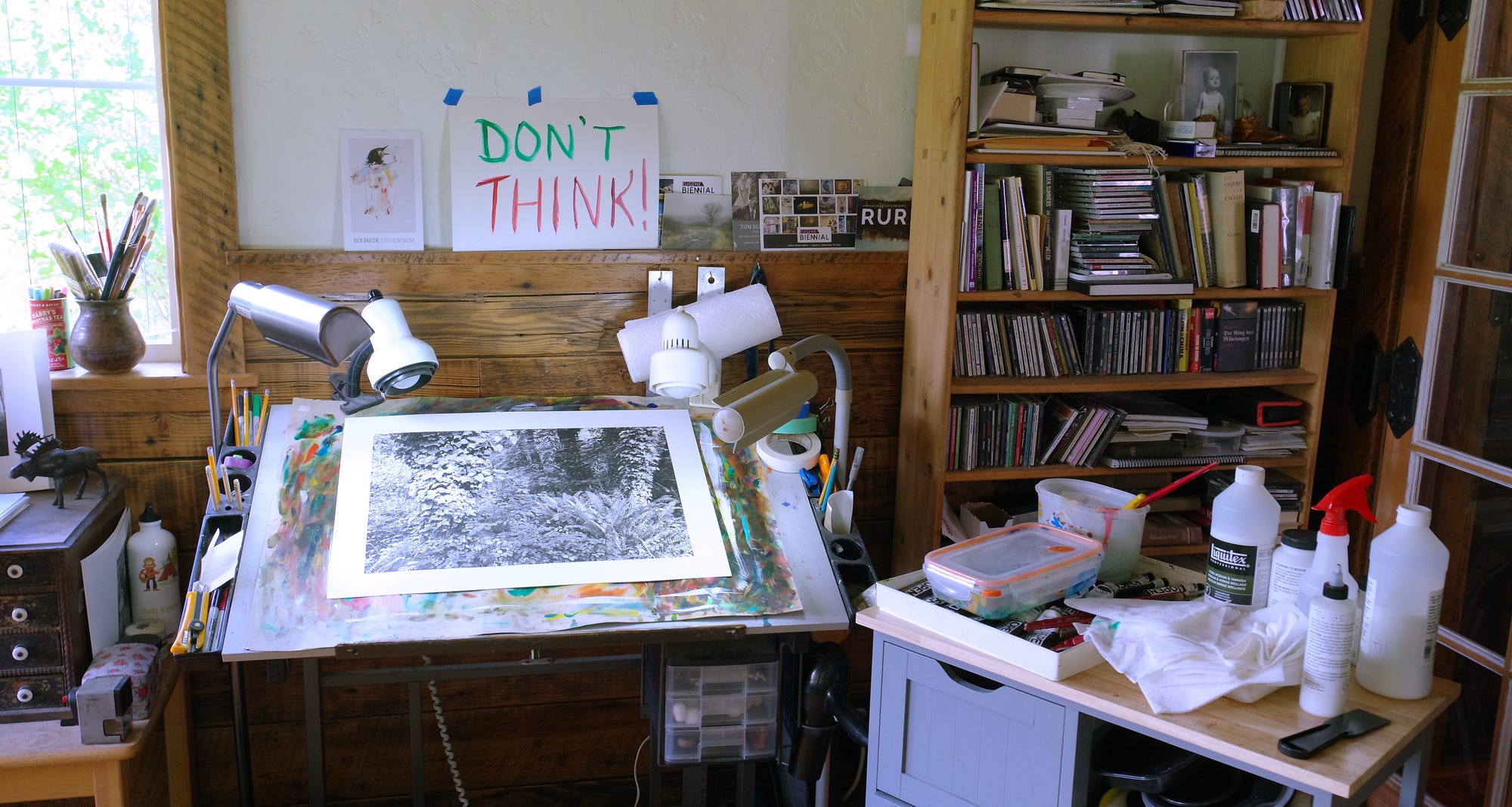
Here’s my work table this morning, as yet another photo awaits random exploration.
Thanks to Ray Bradbury, to Anuj Sarita, and to Paul and the writers group for helping me get back on track. Art’s fun again.
I been thinking lately about connection vs control in all my relationships… including the relationship I form with a piece I m trying to birth…have no idea if this is helpful but I hope it is…:)
And also - isn't this how artists progress?